Bedwetting alarm method
How do the bedwetting alarm method and bedwetting alarm training work?
The bedwetting alarm is a method primarily used for nighttime toilet training in children. The alarm, which is triggered upon urination, ensures that children eventually establish a connection between a full bladder and the need to go to the toilet. Initially, the alarm startles the child, wakes them up, and causes the bladder sphincter muscle to contract. The behavior is learned during this time.
When the child undergoes the bedwetting alarm training over several weeks, they make a connection between the alarm and a full bladder. Because the behavior for using the toilet has been learned, the child wakes up when their bladder is full and goes to the toilet on their own. This process is called classical conditioning.
The bedwetting alarm method is based on operant and classical conditioning. Operant conditioning is a process in which human behavior changes due to the consequences of that behavior. In the bedwetting alarm method, the consequence of bedwetting is that the alarm is triggered. A child would rather avoid this, because it is not pleasant to be woken up in the middle of the night. Bedwetting alarm training helps the child recognize a full bladder, but the child will also do their best not to be woken up by the alarm.
It is important to reward a child for dry nights. This increases the effectiveness of the bedwetting alarm training.

The Dryly® bedwetting alarm method
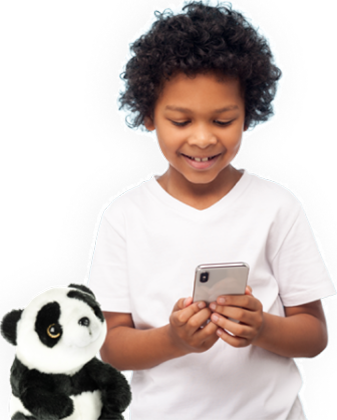
This method is an effective way to stop bedwetting, but how does the bedwetting alarm method work? Before bedtime, your child puts on special Dryly® underwear, which is connected via a transmitter to our mobile app and the receiver, which is hidden inside Wizzu (the panda plush toy). For older children, the receiver can be used separately. Both the panda and the mobile app act as an alarm. Wizzu for your child and the mobile app for you as parents. This gives you insight into when and how often your child urinates per night.
This way, you know exactly when your child wets the bed, and you can help your child continue to urinate in the toilet! As soon as the underwear gets wet, both alarms ring. This bedwetting alarm training trains your child to wake up from a full bladder. The bedwetting alarm method has proven itself, as the bedwetting alarm training subconsciously ensures the recognition of the problem and the will to solve it.
Crucial to the success of toilet training is that you, as parents, support your child during the process. That is why we provide insight into your child's behavior via the mobile app. Wizzu is proud to be at the heart of this method with a bedwetting alarm and should truly become a friend who helps your child with toilet training.
Before you start the Dryly® bedwetting alarm training, set up the mobile app together with your child. This is fun and motivates your child, as Wizzu plays the lead role in the app. You enter your child's name, age, and gender so that the app can optimally support you in the toilet training process.
Then, explain the purpose of the bedwetting alarm training to your child. On the first night, let them practice putting on and taking off the underwear and turning off the Dryly® receiver (inside Wizzu the panda bear). Together with urologists, we have developed a special ritual for the bedwetting alarm training that you can perform before your child goes to bed.
-
The Dryly® ritual is very important, and the app supports you in this. Follow the instructions in the app, and you will be well prepared for the night!
When the panda goes off at night, go to your child's bedroom and turn on the light. Wait until your child turns off the sound themselves and goes to the toilet. Give your child a compliment if things go well at that moment and the next morning. - If your child takes more than three minutes to turn off the panda, wake them up gently. Let your child go to the toilet without praising them. Do not focus on whether they are wet. Your child should still be woken by the sound of Wizzu (and not by the parents).
- If your child wakes up because of the panda, that counts as a successful night. Your child earns points for this in the mobile app. With these points, they can buy fun gadgets for Wizzu.
- The bedwetting alarm training via our Dryly® bedwetting alarm app does not solve the bedwetting problem in one go, but is intended to create a positive trend where the child wets the bed less and less often.
Order your Dryly bedwetting alarm
Bedwetters and deep sleepers
Children who wet the bed often sleep very deeply and therefore have difficulty waking up. If this is also the case for your child, it may be that the sound does not wake them the first few times. In this case, wake your child gently so that they can get used to the sound. After one to four weeks, you will notice that their sleep becomes less deep and your child wakes up more easily!
History of the bedwetting alarm method
The bedwetting alarm method was discovered by chance around 1920. Austrian pediatrician Meinhard von Pfaundler was looking for a way to notify caregivers when a child had wet the bed. He found it disturbing that children lay in a wet bed for long periods and wanted to help both the children and the nursing staff. He developed a device that triggered an alarm when a child wet the bed. Coincidentally, it was also discovered that the children who used this method went to the potty more often. It later turned out that this bedwetting alarm training was a complete success.
Supporting your child with bedwetting problems as a parent is crucial to the success of the bedwetting alarm training. That is why we provide insight into your child's behavior via the mobile app. Wizzu proudly plays a central role in this bedwetting alarm method and should truly become the friend who supports your child in becoming dry.
-

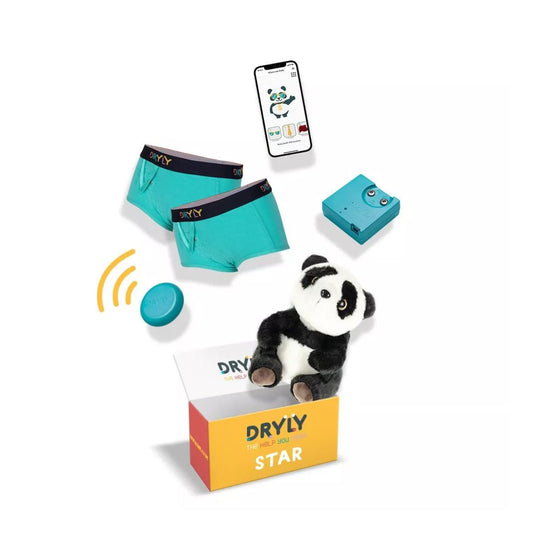
Dryly® Bedwetting Alarm Star
Normal price CHF 239.00Offer price CHF 239.00Unit Price per- Dryly® App
- Optional vibration function
- Sender and Recipient
- Solid-Color Underwear 2 Pack
- Wizzu (Panda Stuffed Animal)
Sale -

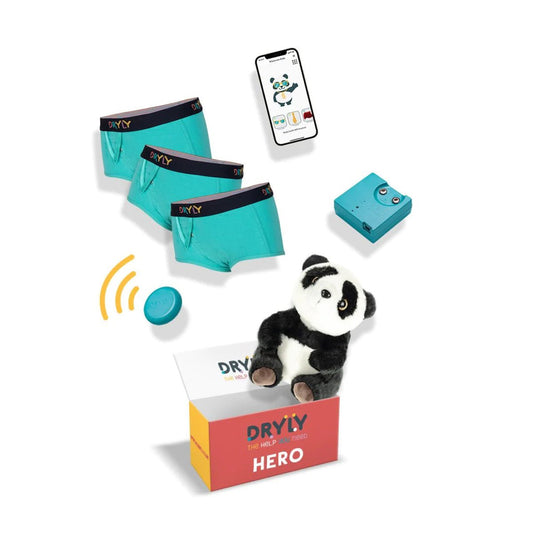
Dryly® Bedwetting Alarm Hero
Normal price CHF 269.00Offer price CHF 269.00Unit Price perMost Popular- Dryly® App
- Optional vibration function
- Sender and Recipient
- Solid-Color Underwear 3 Pack
- Wizzu (Panda Stuffed Animal)
Sale -

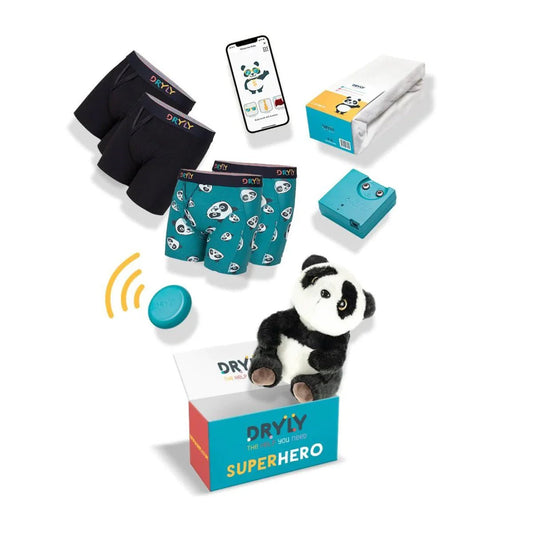
Dryly® Bedwetting Alarm Superhero
Normal price CHF 299.00Offer price CHF 299.00Unit Price perBest deal- 4 pairs of underwear (solid color/print)
- Dryly® App
- With a mattress protector
- Optional vibration function
- Sender and Recipient
- Wizzu (Panda Stuffed Animal)
Sale